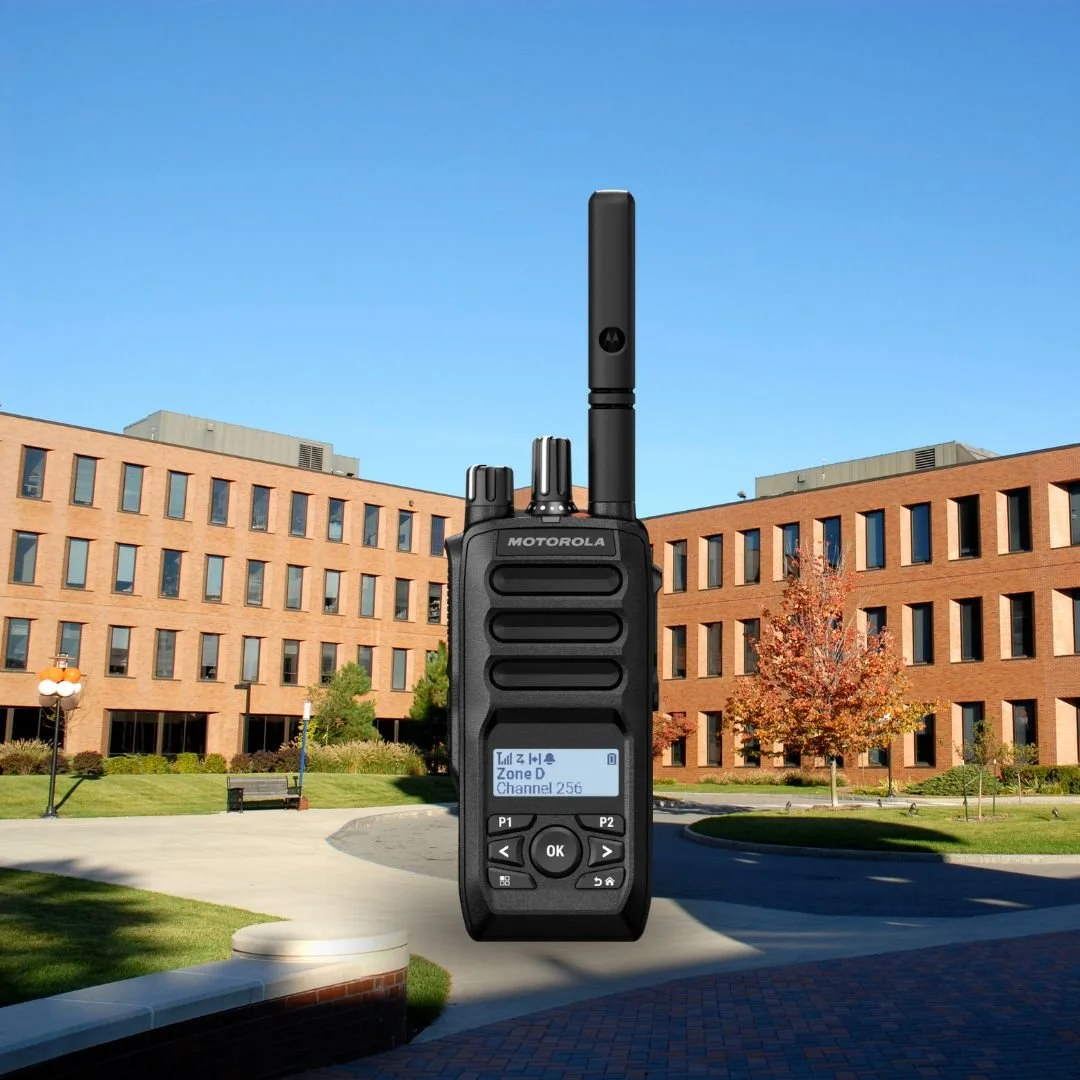
Trying to coordinate yard duty, sports carnivals, and emergency drills across a sprawling school campus can be a tough gig.
If your staff are still relying on personal mobile phones or cheap retail walkie-talkies, you have probably already noticed the gaps. Dead spots inside old brick classrooms, radio interference from local tradies on public channels, and delayed text messages are common headaches.
When it comes to campus safety, communication needs to be instant, private, and 100% reliable. Moving past standard consumer devices to a commercial-grade network eliminates these daily frustrations. Here is a look at what makes a secure campus setup and how to match the right hardware to teaching and facility staff.
Why Mobiles and Retail Radios Fail on Campus
When a facility manager or principal needs to trigger a lockdown or coordinate first aid on the oval, you can't afford delays. Consumer tech usually falls short for three reasons:
Group Texts Aren't Instant: Mobile networks frequently drop out in basements or dense concrete buildings. Plus, teachers actively running a class aren't checking their phones for text updates.
Public Frequency Interference: Basic walkie-talkies bought from a retail store run on open, public frequencies. This means anyone nearby can accidentally talk over your staff, or worse, listen in on private school communications.
Poor Range: Retail radios just don't have the transmission punch to reach across a massive multi-hectare university campus.
What a Proper Campus Radio Setup Actually Looks Like
Moving to a commercial-grade setup changes how your school operates. Instead of hoping a message gets through, you get purpose-built features designed for safety protocols:
Complete Privacy: Commercial radios operate on ACMA-licensed private frequencies or encrypted cellular/Wi-Fi networks. No interference, no eavesdropping.
Emergency 'All-Call': If an evacuation is triggered, administrators can use an All-Call feature to broadcast a single message to every radio on campus instantly.
Transmit Interrupt: This allows senior staff to override regular, non-urgent radio chatter to deliver urgent safety instructions.
Dedicated Talk Groups: You can separate staff into specific channels (Admin, Grounds, First Aid, Yard Duty) so routine maintenance calls don't distract teachers.
The Best Radios for Australian Schools
Not everyone on campus needs the exact same piece of hardware. Here is how a radio fleet is typically mapped out for education environments using Motorola's commercial lineup:
1. Motorola Curve: For Teachers & Administration
Teachers need something light and practical that won't weigh down a lanyard during yard duty.
Wi-Fi Voice Assistant: Staff can press a button and simply use their voice to change channels or contact specific departments, keeping their eyes up and on the students.
Comfortable & Discreet: It's ergonomic and easy to wear all day, delivering clear audio without being overly bulky.
2. Motorola MOTOTRBO R2: The Campus Workhorse
For sports departments, event coordination, and general campus ops, the R2 is the go-to standard.
Punches Through Brick: High receiver sensitivity means the digital UHF signal easily cuts through thick classroom walls and reaches across massive sporting fields.
All-Day Endurance: The battery is built to last through the entire school day, after-school sports, and evening events without needing a recharge.
Built Tough: It handles being dropped on the concrete or caught in the rain during outdoor duties.
3. Motorola TLK110: For Facilities & Multi-Campus Security
Security and maintenance teams need to move everywhere. The TLK110 runs on Push-to-Talk over Cellular (PoC), making it perfect for sprawling or multi-site universities.
Limitless Range: It hops seamlessly between the school's Wi-Fi and the nationwide 4G network. A facility manager can talk to the main campus even if they are driving out to a secondary site.
Worker Safety Alerts: It includes a dedicated panic button and automated 'Man Down' fall alerts—a lifesaver for maintenance staff working alone in plant rooms.
AI Noise Suppression: It filters out background noise from lawnmowers or crowded cafeterias, so every dispatch is perfectly clear.
Ditching unreliable phones and retail walkie-talkies for a proper commercial fleet makes your campus safer and your staff more efficient. If you are looking to upgrade your school's comms before the next term, mapping out your departments is the best place to start.