Overcoming Concrete & Steel: Two-Way Radio Solutions for Aussie Stadiums
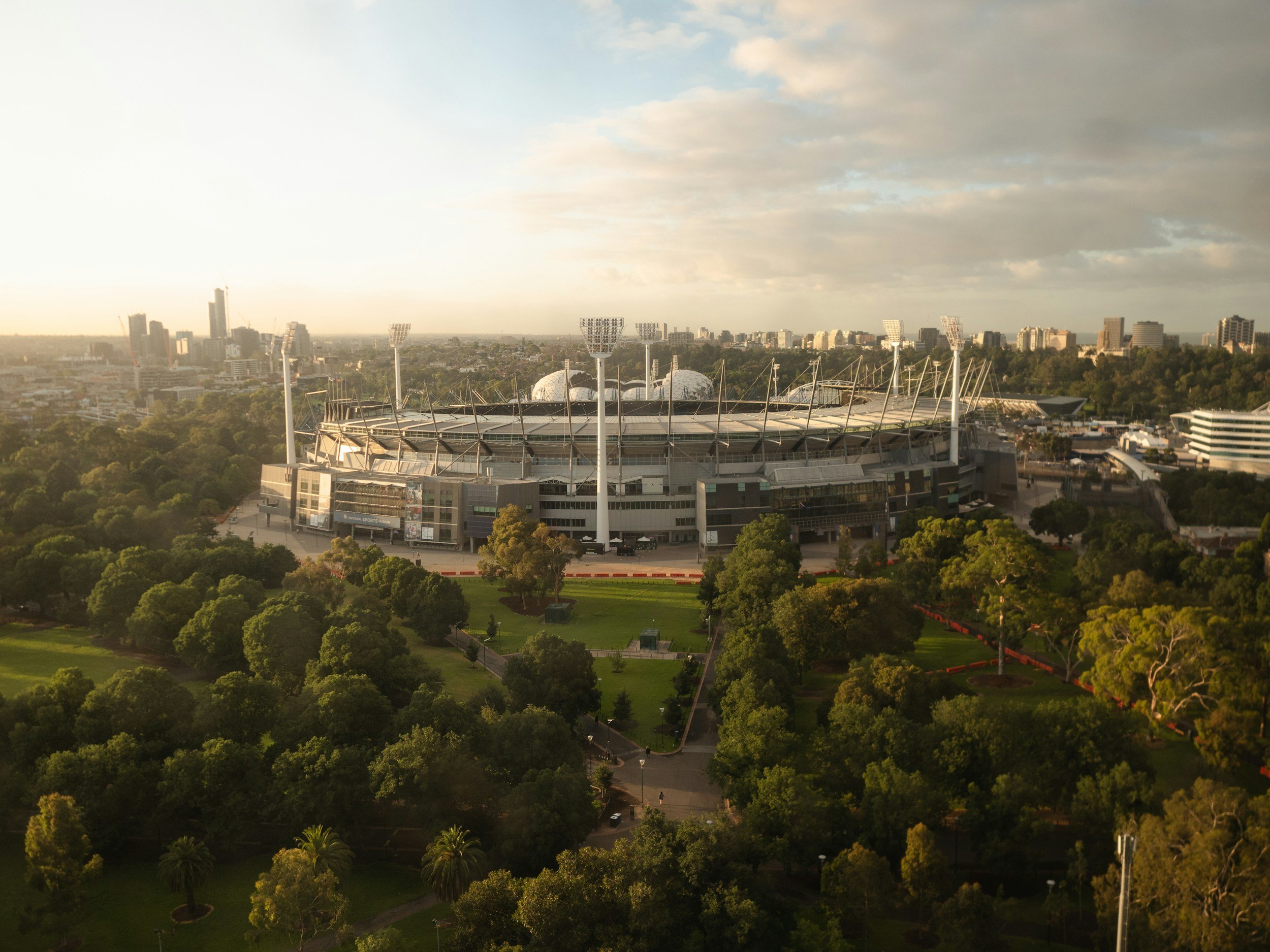
Managing a major Australian venue—whether it is an AFL blockbuster at the MCG, a massive concert at Sydney's Afterpay Arena, or a summer cricket test at Optus Stadium—comes with a unique engineering challenge. The very materials built to hold tens of thousands of cheering fans are notorious for blocking radio signals.
Historically, eliminating "dead zones" in multi-level grandstands, underground player tunnels, and basement plant rooms required installing complex Distributed Antenna Systems (DAS), running kilometres of heavy coaxial cabling, and mounting expensive private repeater towers on the roof.
Today, venue operations directors are taking a much simpler, cost-effective route. By deploying Push-to-Talk over Cellular (PoC) radios that run on the venue’s existing enterprise Wi-Fi and Australian mobile networks, stadiums can achieve 100% coverage from the deepest basement to the highest seating bowl—without adding rigid infrastructure.
The Architectural Challenges of Stadium Communications
Traditional radio signals struggle inside modern sports complexes due to three main structural hurdles:
Reinforced Concrete & Steel Shielding: Concrete walls absorb and reflect UHF/VHF signals, creating massive blind spots in underground loading docks, change rooms, and inner concourses.
Multi-Level Elevation: Passing signals between sub-basement maintenance areas and upper-tier seating decks often requires immense transmitter power or dedicated indoor antenna networks.
Massive Ambient Noise: During a sold-out NRL grand final or an international stadium tour, crowd volume can easily breach 100 decibels, making clear voice transmission nearly impossible without specialised audio technology.
The Infrastructure-Free Solution: Leveraging Stadium Wi-Fi
Modern venues already invest heavily in high-density enterprise Wi-Fi to support digital ticketing, POS systems, and media centres.
PoC radios running on platforms like Motorola WAVE PTX tap directly into this existing network footprint. When staff are deep inside the stadium structure, the radio communicates seamlessly over the internal Wi-Fi access points. The moment a security guard steps outside to patrol perimeter gates, transport hubs, or parking areas, the radio automatically switches over to nationwide 4G/5G LTE networks (like Telstra or Optus).
Why This Changes Stadium Operations:
Zero Coaxial Cabling: There is no need to drill through concrete firewalls or run expensive leaky-feeder cabling through stadium risers.
Instant Basement Coverage: If your Wi-Fi network reaches the basement plant room or sub-level loading dock, your radios work there instantly.
No Network Congestion: While 80,000 fans uploading videos to social media might clog public cellular bands, your internal enterprise Wi-Fi channels remain dedicated and prioritised for critical staff comms.
Matching the Radio to the Stadium Department
A major venue requires different tools for different roles. The Motorola TLK series provides two purpose-built units that cover every stadium department:
Motorola TLK25: Built for Ticketing, Guest Services & Corporate Suites
Guest-facing staff need a radio that is lightweight, discreet, and simple to operate.
Wearable & Screenless: Weighing just 77 grams, the TLK25 is designed as a compact, wearable device that clips easily to a uniform lanyard, badge, or pocket. Without an external screen to crack, it is incredibly durable and unobtrusive.
Discreet Audio: The TLK25 requires an earpiece to operate, ensuring that internal operational comms are never broadcast loudly in front of VIPs or corporate suite guests.
Intuitive Voice Assistant: Powered by natural language processing, staff can simply use their voice to change channels, manage settings, or place calls without needing to look down at their device.
Motorola TLK110: Built for Venue Security, Facilities & Stage Crews
Security leads, emergency responders, and maintenance technicians require heavy-duty performance deep inside the facility.
Dual Wi-Fi Roaming (2.4 GHz & 5 GHz): The TLK110 seamlessly hops between Wi-Fi access points as guards patrol multi-tiered concourses and underground hallways without dropping calls.
AI Noise Suppression: Uses advanced algorithms to strip out the roar of screaming fans or heavy machinery, isolating the user's voice so security dispatches cut through cleanly.
Rugged & Safe: IP67 rated against water and dust, with an emergency panic button and built-in Man Down / Lone Worker fall alerts for engineers working alone in high-risk plant rooms.
Scaling Venue Fleet Sizes on Demand
One of the biggest operational advantages of a broadband radio system is scalability. When hosting a massive international tournament or a multi-day festival requiring 100 additional security guards, venue managers do not need to re-programme frequencies or deal with ACMA licensing for additional repeater channels. Extra radios can simply be added to the existing WAVE PTX network and handed out to staff immediately.
By leveraging the enterprise Wi-Fi infrastructure already in place, Australian stadiums can eliminate dead zones, protect their staff, and streamline operational communications efficiently.