RSM vs. Earpieces: Choosing the Right Two-Way Radio Accessories for Film Sets
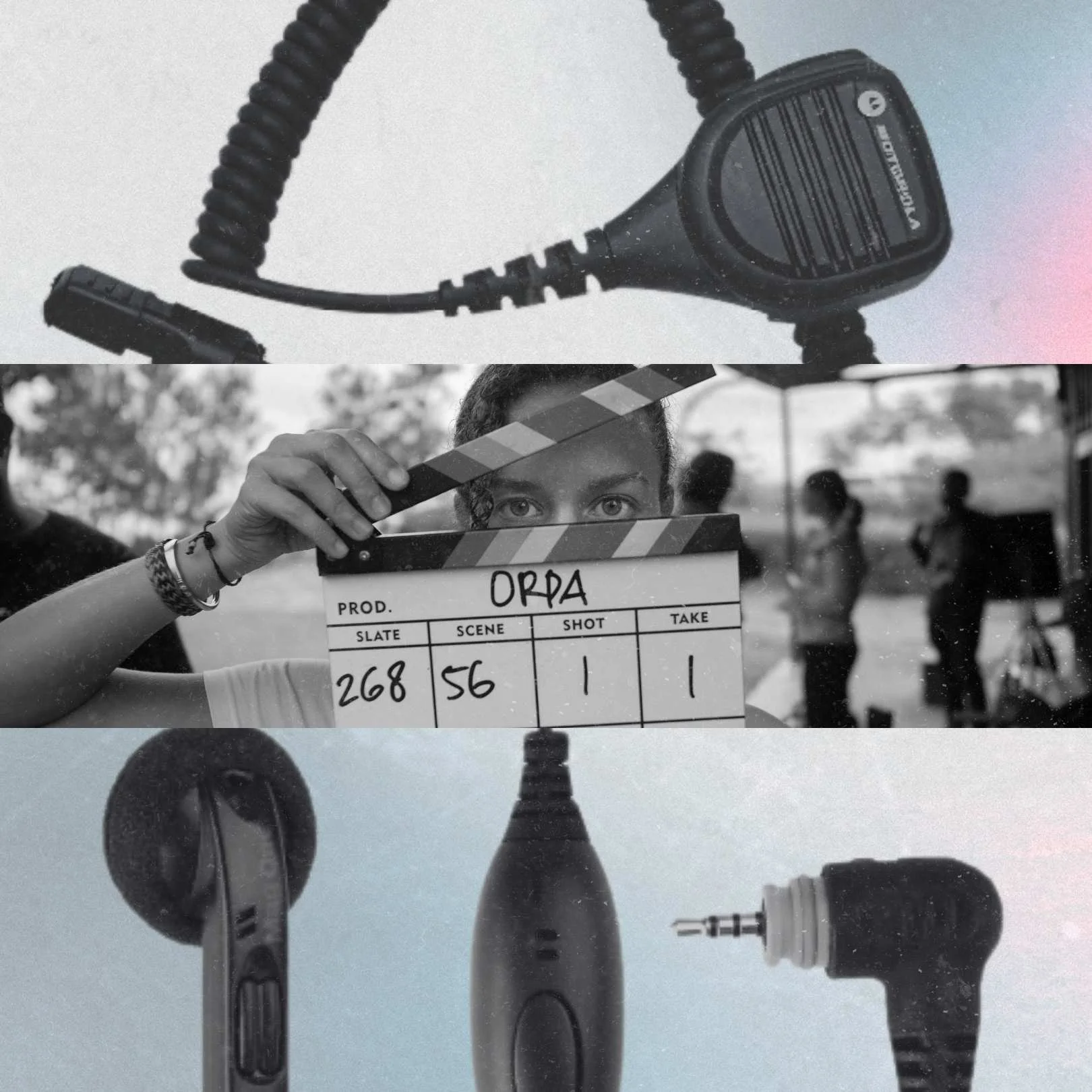
Walk onto any film or TV production in Australia, and you’ll see a commercial Motorola two-way radio clipped to almost every belt. But the radio itself is only half the setup. How you actually listen and talk on that radio makes all the difference to how a set operates.
When you’re organizing two-way radio hire for a film production, the biggest debate usually comes down to the accessories: do you go with the classic Surveillance Earpiece or the heavy-duty Remote Speaker Microphone (RSM)?
The Surveillance Earpiece: The Industry Standard
Also known as the acoustic tube or the "Secret Service" earpiece, this is the default walkie-talkie accessory for about 90% of a film crew. It consists of a clear coiled tube that goes into your ear, and a small microphone with a push-to-talk (PTT) button that usually clips to your collar.
Why it’s essential on set: Nothing annoys the Sound Department faster than a radio squawking halfway through a quiet dialogue scene. The absolute biggest advantage of the surveillance earpiece is total discretion. Only you hear what is being broadcast on your channel.
Who wears it:
Assistant Directors (ADs): They live on the radio. They need to hear everything clearly without disrupting the actors.
Camera & Sound Dept: Total silence is non-negotiable.
Art Dept, Props & Wardrobe: Constantly moving around set and need to stay in the loop without broadcasting channel chatter to everyone in the room.
The Verdict: If you are anywhere near the camera, the actors, or the "hot set," the acoustic tube earpiece is mandatory.
The Remote Speaker Microphone (RSM): The Heavy-Duty Option
The RSM (often just called a "shoulder mic") clips directly to your lapel or the shoulder strap of a high-vis vest. It features a large push-to-talk button, a built-in microphone, and a loud external speaker.
Why it’s essential on set: Earpieces can get uncomfortable during a 14-hour day, and the clear tubes can easily snag if you are carrying heavy gear. The RSM is rugged, loud, and incredibly easy to use. You don't need to fish around for a tiny wire on your collar—you just grab the mic on your shoulder and talk. It’s also much easier to operate if you are wearing heavy work gloves.
Who wears it:
Locations & Unit: Managing parking, setting up marquees, and dealing with the public. They are usually far enough away from the set that radio noise isn't an issue.
Transpo (Transport): Drivers need loud, clear audio inside noisy truck cabins.
Grip & Electrics (Sparks): When you are rigging lights or carrying heavy stands, you don't want wires tethering your head to your belt. (Though many will switch to earpieces once the cameras actually start rolling).
The Verdict: If you are working outside the shooting zone, managing logistics, or doing heavy physical labor, the RSM is the way to go.
Getting Your Set's Accessory Ratio Right
When you are organizing walkie-talkie hire for a film set, getting the accessory ratio right is crucial. Order too many RSMs, and you'll have a noisy set; order too many earpieces, and your logistics crew will break them.
As a general rule for most productions, you'll want an 80/20 split. Roughly 80% of your crew—anyone near the camera or talent—needs a surveillance earpiece. The remaining 20%—Locations, Unit, and Transpo—will benefit from the ruggedness and volume of a shoulder mic.
Sorting Your Film Crew Comms
Getting the right accessories isn't just a matter of preference—it dictates how smoothly your production runs. Supplying the ADs with shoulder mics will ruin takes, and giving Transpo delicate earpieces will just result in broken gear.
At Roar Radios, we’ve been supplying two-way radios for Australian film and TV productions for over 20 years. We don't just hand over a box of walkie-talkies; we make sure your crew gets the exact mix of Motorola radios, multi-chargers, earpieces, and RSMs they need to get the job done.
Need to sort out the comms for your next shoot? Shoot us a message or give us a bell here.