Renting vs. Buying Radios for Your Indie Film Shoot
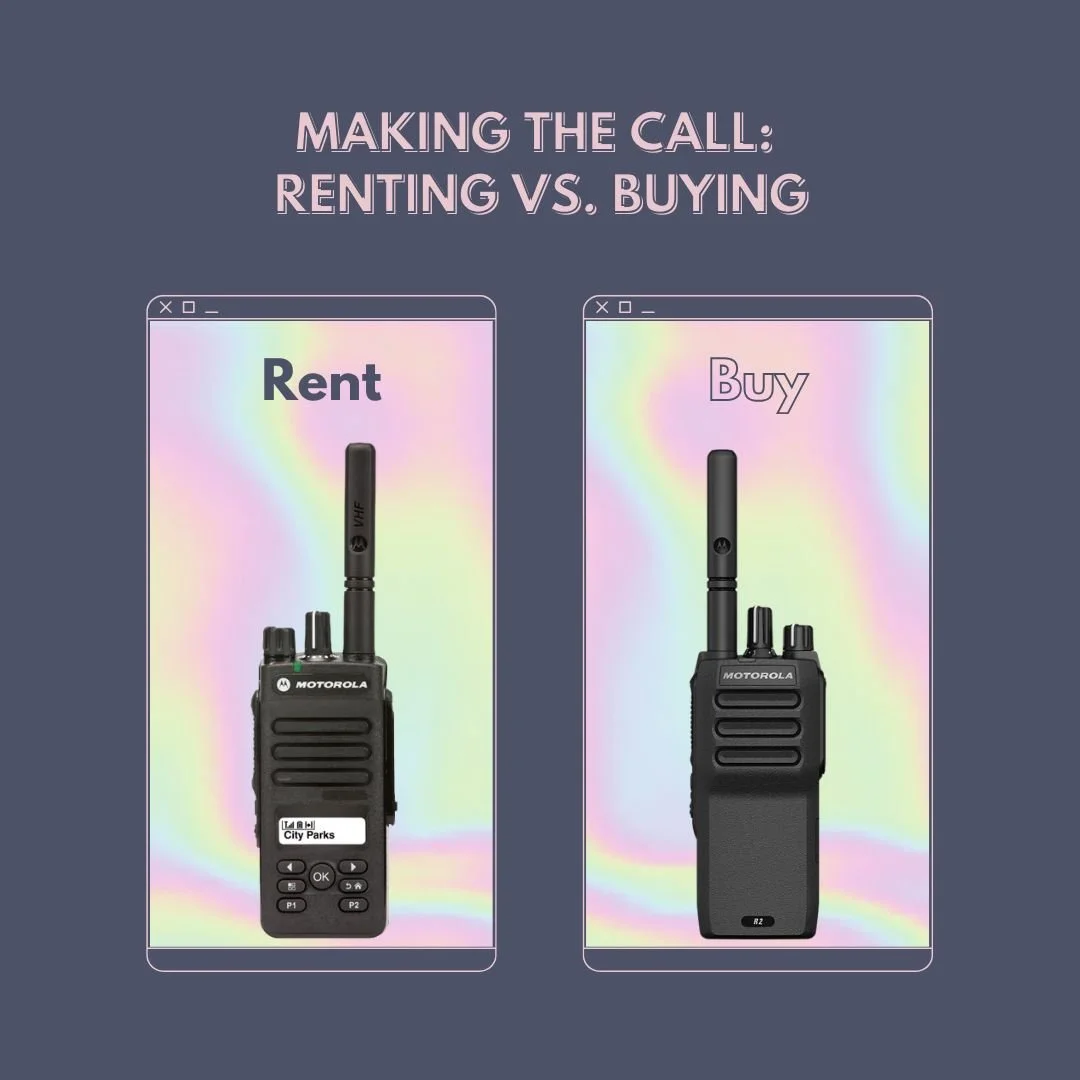
As an indie producer or line manager, keeping the budget tight is everything. Eventually, every production team hits the exact same crossroads: do we rent the heavy-duty, industry-standard walkie talkies for our three-week shoot, or do we bite the bullet and buy a cheaper fleet to keep forever?
It’s a great question, and the answer usually comes down to how often your crew is actually on set. Here is how we break it down for local filmmakers.
The Rental Standard: The Motorola DP2600
If you've ever stepped onto a professional TV or film set in Australia, you’ve probably had a Motorola DP2600 clipped to your belt. It is the undisputed heavyweight champion of production comms. It handles hard drops onto the pavement, blocks out loud location noise, and the battery easily survives a grueling 14-hour day from call time to wrap.
But here is the financial reality: outfitting a 30-person crew with brand-new heavy-duty radios is a massive capital expense. For a one-off feature film or a short documentary shoot, that upfront cost simply doesn't make sense.
That is exactly why the vast majority of productions choose to rent. Renting gives your crew access to top-tier, ultra-reliable gear for a fraction of the purchase price, and you just hand it all back when the director calls "cut."
The Trap of the "Cheap Online Deal"
When trying to stretch a budget, it can be incredibly tempting to jump onto Amazon and buy a massive multi-pack of budget radios. Unfortunately, this usually ends up costing productions more in the long run.
Consumer-grade radios are notorious for picking up cross-channel interference, dealing with rapid battery drain, and malfunctioning right in the middle of a critical setup. When a 1st AD’s radio drops out, the entire set grinds to a halt. Whether you are renting or buying, sticking strictly to commercial-grade Motorola radios is the only way to guarantee your comms actually survive the physical demands of a film set.
The Must-Have Set Accessories
Whether you rent a kit for the week or build your own fleet, the radios themselves are only half the equation. To run a set properly, you need the right accessories. (When you rent from Roar Radios, we typically provide all of these as standard).
In-Ear Earpieces (Surveillance Kits): When the 1st AD calls "quiet on set," they mean it. Having a radio squawk out loud right before the camera rolls will instantly ruin an audio take. Low-profile, in-ear earpieces keep all comms strictly in the crew's ear.
Multi-Bank Chargers: Trying to find 30 individual wall outlets in a muddy basecamp tent is a nightmare. A 6-way multi-bank charger keeps basecamp organized and ensures every radio has a dedicated home at wrap.
Spare Batteries: A typical film day runs for 12 to 14 hours. Having a cache of fully charged spare batteries ready to hot-swap at lunch ensures nobody goes dark before the final shot.
Heavy-Duty Pelican Cases: Film gear gets thrown into the back of unit trucks and dragged across rough locations. We pack all our rental kits in rugged Pelican cases so your comms arrive organized, protected from the elements, and ready to deploy the second you hit basecamp.
When Does Buying Make Sense?
If your production company is shooting constantly—think weekend music videos, weekly corporate commercials, or back-to-back short-form content—those weekly rental fees will eventually eclipse the cost of just owning your own gear.
Here are our top two recommendations for building a reliable, Motorola-backed indie fleet:
1. Motorola R2: The Indie Workhorse The Motorola R2 is a brilliant entry point for production companies looking to buy their own gear. It’s tough, lightweight, and boasts a solid IP55 rating, meaning it easily handles location shoots in light rain or dusty environments. It also features excellent SINC+ noise suppression to actively strip out wind and street noise, making it perfect for indie sets shooting on location.
2. Motorola R7: The Premium Upgrade If you have a slightly bigger gear budget and want to own a fleet that rivals the top-tier rental kits, the Motorola R7 is an absolute powerhouse. It is built to strict military standards with an IP68 waterproof rating. The real magic, though, is the adaptive dual-microphone noise cancellation. If you are shooting a loud club scene or running a massive generator right next to video village, the R7 actively listens to and cancels out the background roar, ensuring every call comes through perfectly clean.
The Verdict
For one-off shoots and major features, renting a DP2600 kit fully loaded with earpieces, spare batteries, and packed safely in a Pelican case is always the smartest, most budget-friendly move. But if your production company is shooting year-round, investing in a permanent fleet of genuine Motorola R2s or R7s is an investment that will pay for itself in no time.