The "All-in-One" Solution: Why It’s Time to Ditch Dumb Radios in Data Centres
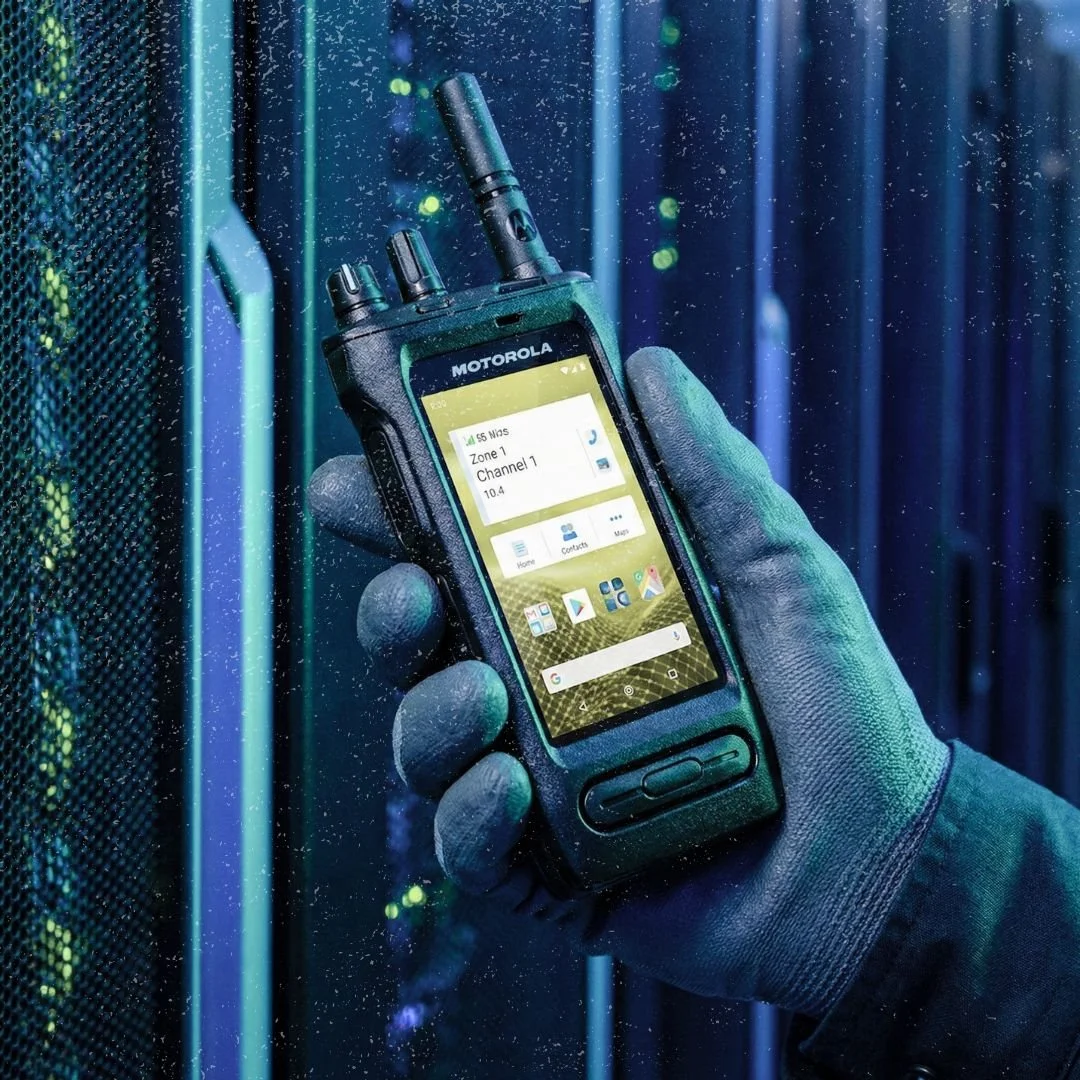
Let’s be real for a second. If you work in a data centre, your pockets are probably heavier than your toolbag.
You’re doing the "tech shuffle" every single day. You’ve got your work phone for email and Slack, a laptop for diagnostics, maybe a tablet for ticketing, and then a big, bulky two-way radio clipped to your belt for talking to the control room.
It’s a lot of gear to juggle when you're trying to squeeze down a hot aisle to trace a cable. And honestly, it’s kind of annoying that in facilities packed with cutting-edge server tech, we’re still relying on "dumb" brick radios that only do one thing.
Don't get us wrong, instant push-to-talk (PTT) is essential for safety and quick coordination. You can't beat it. But for IT professionals who live and die by data, a radio that just does voice isn't pulling its weight anymore.
This is the logical next step for IT facility comms in Australia. The old-school bricks are out, and 'Smart Radios' are in.
The Problem with the "Tech Shuffle"
The issue isn't the radio itself; it's the disconnect.
Say you're at a rack and need to verify a serial number. You have to put down your radio, pull out your phone to scan a QR code, open an app to check the ticket, and then pick up the radio again to report back to the NOC. It’s clunky. It wastes time. And if you drop something? Nightmare.
Modern tech teams need devices that match their workflow. You shouldn't have to choose between clear voice comms and access to your essential apps.
Meet the Hybrid: The Android Two-Way Radio
This is where things get interesting. Manufacturers like Motorola have realised that techs need a hybrid device—something that’s rugged enough for a server room but smart enough to run your daily apps.
Enter the Motorola Ion.
It’s the device that finally makes sense for this environment. It looks like a radio, feels like a radio, and has that big, textured PTT button you can find without looking. It’s built tough to handle drops onto concrete sub-floors and shrug off dust.
But turn it on, and it’s running a full Android operating system.
Suddenly, that one device on your belt does the lot:
Scanning & Ticketing: Use the rear camera to scan QR codes on server racks and pull up the asset history immediately in Jira, ServiceNow, or your own internal apps.
Loud & Clear: The audio is engineered for high-noise environments. It automatically suppresses the background drone of cooling fans so your voice actually cuts through.
Real Redundancy: It uses DMR (Digital Mobile Radio) for voice and LTE/Wi-Fi for data. If the network goes down (or you're in a dead zone), the radio still works.
The Wi-Fi Warrior: The Motorola Evolve
If the Ion is a radio that learned to be smart, the Motorola Evolve is a smartphone that learned to be tough.
For facilities that have 100% Wi-Fi saturation (or solid LTE coverage), the Evolve is a brilliant upgrade from a standard mobile.
Why swap your work phone for this?
Dedicated Controls: Unlike a smartphone, it has dedicated PTT and Emergency buttons. You don’t need to unlock a screen or fumble with an app to talk to the control room.
Glove Friendly: The touchscreen works even when you're wearing gloves—handy if you're working in cold aisles or handling cabling.
Rugged Build: It’s fully waterproof and dustproof (IP68). You can drop it, get it wet, or use it in a dusty plant room, and it just keeps working.
It connects seamless over LTE and Wi-Fi, bridging the gap between a phone and a radio fleet without the bulk.
Time to Lighten the Load?
Look, nobody loves carrying more gear than they have to. If you can replace three devices with one that does the job better, it’s worth a look.
The move towards smart radios in Australia isn't just about having flashy new tech; it’s about making your day-to-day life a little less chaotic.
If you’re sick of the tech shuffle and want to see how these all-in-one devices work in the real world, give us a shout. We’re happy to chat through the options and help you find something that fits your facility.