Line of Sight vs. 4G and Wi-Fi Radios: Which Communication System is Right for Your Team?
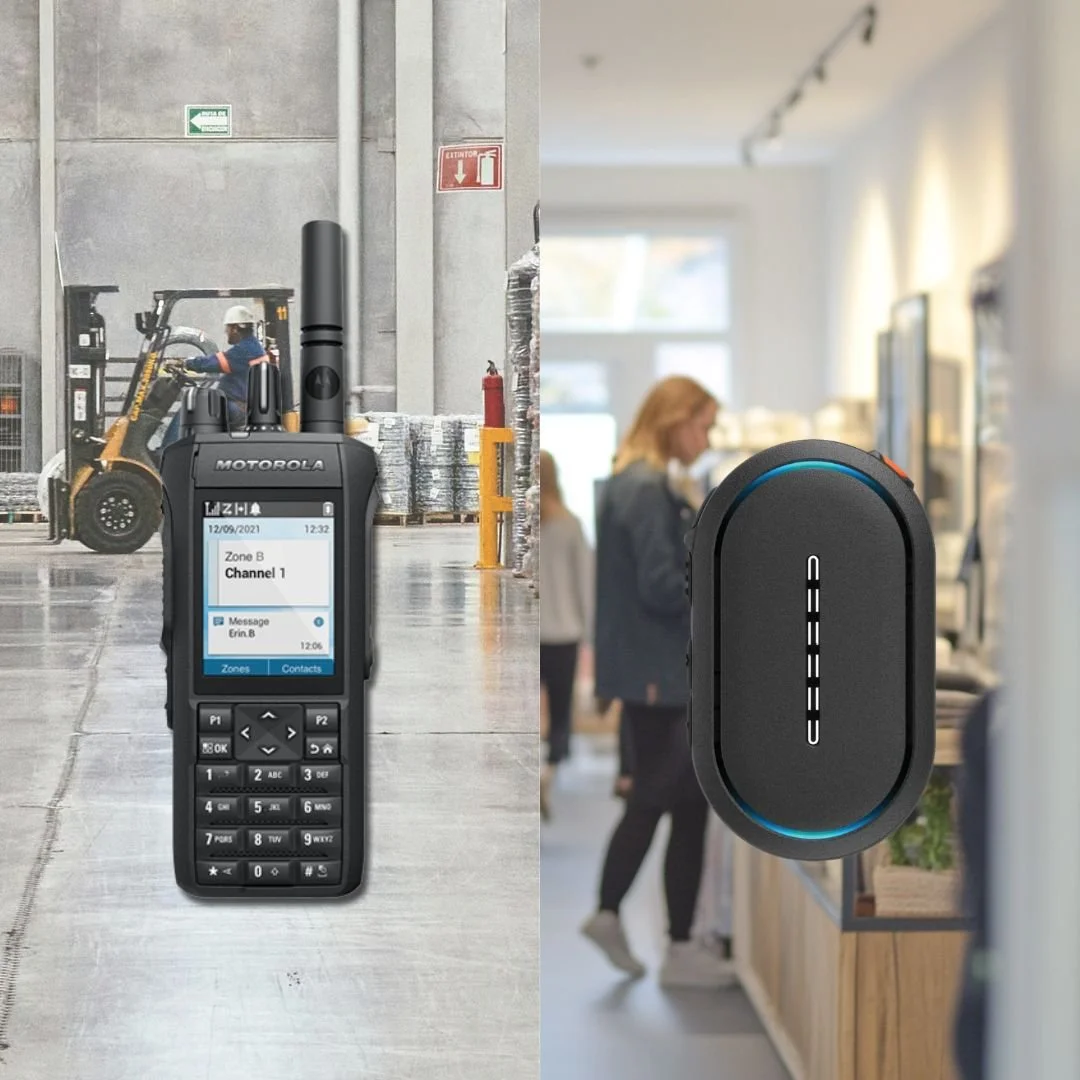
If you are upgrading your site’s communication equipment, you will quickly run into a major fork in the road: do you stick with traditional line of sight radios (UHF/VHF), or is it time to move to 4G LTE and Wi-Fi radios?
It is one of the most common questions operations and procurement managers ask us. The truth is, one technology isn't inherently better than the other—it completely depends on your environment, your footprint, and how your team actually works on the floor.
Here is a practical breakdown of how traditional two-way radios compare to modern Push-to-Talk over Cellular (PoC) devices, and which industries benefit most from each.
Line of Sight Radios (UHF / VHF)
When people think of commercial two-way radios, this is usually what comes to mind. Line of sight radios transmit directly from one handset to another using radio waves. As long as the radios are within range of each other (or a repeater), they work.
Why they are chosen:
Zero Network Dependency: They don't rely on cellular towers or Wi-Fi routers. If the power goes down or you are in a remote dead zone, your radios will still transmit perfectly.
Instant, Unfailing Connection: There is zero lag. The millisecond you press the button, the channel is open.
Durability and Simplicity: These devices are built for the harshest conditions. They have heavy-duty noise cancellation, IP waterproof ratings, and no fragile touchscreens.
No Ongoing Data Costs: Once you own the hardware and have your ACMA licensing sorted, there are no monthly SIM card or data fees.
Industries that benefit most:
Manufacturing and Warehousing: Thick concrete walls and heavy steel machinery are notorious for blocking Wi-Fi and 4G. UHF radios can punch through these obstacles.
Film & Television Production: Shoots often happen in remote locations or expansive backlots where mobile reception drops out.
Construction & Heavy Industry: Environments where equipment will inevitably be dropped on concrete or covered in dust.
Standout Models at Roar Radios:
MOTOTRBO R2: The ultimate grab-and-go workhorse. It features heavy-duty noise cancellation that cuts right through the roar of warehouse forklifts and factory machinery.
Motorola R7: The modern industry standard for demanding sites and film sets across Australia, known for its next-level noise cancellation and bulletproof reliability from call time to wrap.
4G LTE & Wi-Fi Radios (Push-to-Talk over Cellular)
Rather than transmitting standard radio waves, these devices use existing internet infrastructure—either your building's Wi-Fi network or nationwide 4G cellular towers. They offer the instant push-to-talk experience of a traditional radio, but with the unlimited range of a mobile phone.
Why they are chosen:
Limitless Range: Because they run on cellular towers or Wi-Fi, you can talk to a team member in a basement in Melbourne and a driver on the highway in Sydney with a single button press.
No Expensive Repeaters: Expanding the footprint of a traditional radio network requires installing expensive repeater antennas. 4G/Wi-Fi radios bypass this completely by piggybacking on existing infrastructure.
Discreet Form Factors: Because they don't need large antennas, these devices can be incredibly small and lightweight.
Advanced Safety and Tracking: Many 4G radios feature GPS tracking, Lone Worker monitoring, and Man Down fall alerts, making them highly effective for remote safety.
Industries that benefit most:
Retail & Hospitality: Luxury hotels and premium retail stores need discreet communication. Wi-Fi radios allow staff to stay connected without bulky devices ruining their uniform or loud radio chatter disturbing guests.
Logistics & Transport Fleets: Delivery drivers and supply chain fleets need instant communication that reaches across state lines.
Sprawling Multi-Site Facilities: Schools, university campuses, and multi-building corporate parks where traditional radio signals struggle to cover the massive footprint.
Standout Models at Roar Radios:
Motorola TLK 25: A tiny, wearable Wi-Fi radio designed specifically for hospitality and retail. It operates entirely via an earpiece and voice assistant, keeping the guest experience completely undisturbed.
Motorola TLK 110: A rugged 4G LTE radio that provides nationwide coverage. It’s perfect for sprawling manufacturing sites, logistics fleets, or school excursion buses that need to stay connected to base camp from anywhere.
How to Make the Call
The easiest way to decide between a line of sight radio and a 4G/Wi-Fi radio is to look at your environment.
If your team operates within a single, contained site (like a warehouse, a localized event, or a remote film set), traditional line of sight radios like the Motorola R2 remain the most reliable, cost-effective choice.
If your operations are spread across a massive footprint, require communication across different cities, or demand an ultra-discreet profile on a hotel floor, the limitless range of a Motorola TLK device is the smarter upgrade.
Still not sure which setup makes the most sense for your operational budget? Reach out to the team at Roar Radios. We can help you navigate the right hire, purchase, or leasing options to get your site perfectly connected.