
Running a sprawling, big-box retail store or a massive national network comes with a unique set of headaches. You’ve got staff navigating thousands of square metres of floor space, a constant flow of traffic at the click-and-collect bay, and forklifts moving pallets in a cavernous stockroom out back.
When a customer asks if there is more stock in the back, or when the front registers need immediate backup, your floor team needs to communicate instantly. But when you manage 50, 100, or 200+ locations across Australia, scaling up communication isn't always as simple as buying a few walkie-talkies.
Rolling out traditional two-way radios can sometimes mean navigating a maze of ACMA licensing fees, complex frequency programming, and casual staff who aren't huge fans of wearing bulky radios on their uniforms.
If you are looking for an easier way to manage your fleet, it might be worth exploring some of the smarter, license-free, and wearable options now available.
The Headache of Traditional Retail Comms
If your network is still relying on basic, analogue two-way radios, your operations and IT teams are likely familiar with these three hurdles:
The Licensing Maze: Traditional commercial radios require you to book and pay for licensed frequencies. Managing those ACMA licenses across different states and territories can be a bit of an administrative drain.
The "Clunky" Factor: Modern retail uniforms just aren't designed to support a heavy, 400-gram radio. When devices are too bulky, staff tend to leave them on the breakroom table, which completely defeats the purpose of having them in the first place.
The IT Setup: If a traditional radio goes down at a regional store, a manager usually has to box it up and mail it back to head office or a tech provider for reprogramming, leaving the floor short-staffed on comms.
Two Modern Alternatives for Big-Box Retail
To get around these issues, operations teams are shifting toward devices that either bypass traditional radio frequencies entirely or use license-free spectrums. Here are two solid options that work brilliantly for large-format retail:

The Wearable Network: Motorola TLK 25
For high-volume, customer-facing roles, the Motorola TLK 25 is a fantastic alternative to the traditional handheld. It doesn't even look like a two-way radio—it is a sleek, lightweight communication device that clips onto a shirt, lanyard, or apron just like a name badge.
No Frequencies Required: It runs entirely on your existing store Wi-Fi and the nationwide 4G LTE network (via WAVE PTX). This means zero ACMA licensing fees and fewer dead spots, even deep in a concrete stockroom.
Multi-Site Scaling: Because it uses 4G and Wi-Fi, an area manager in Melbourne can push a button and instantly talk to the floor manager of a specific store in Perth.
Discreet & Hands-Free: Paired with an earpiece, staff can coordinate click-and-collect orders, call for a clean-up on aisle four, or alert loss prevention to a WHS issue without alarming shoppers. It keeps their hands free to scan items or restock shelves.
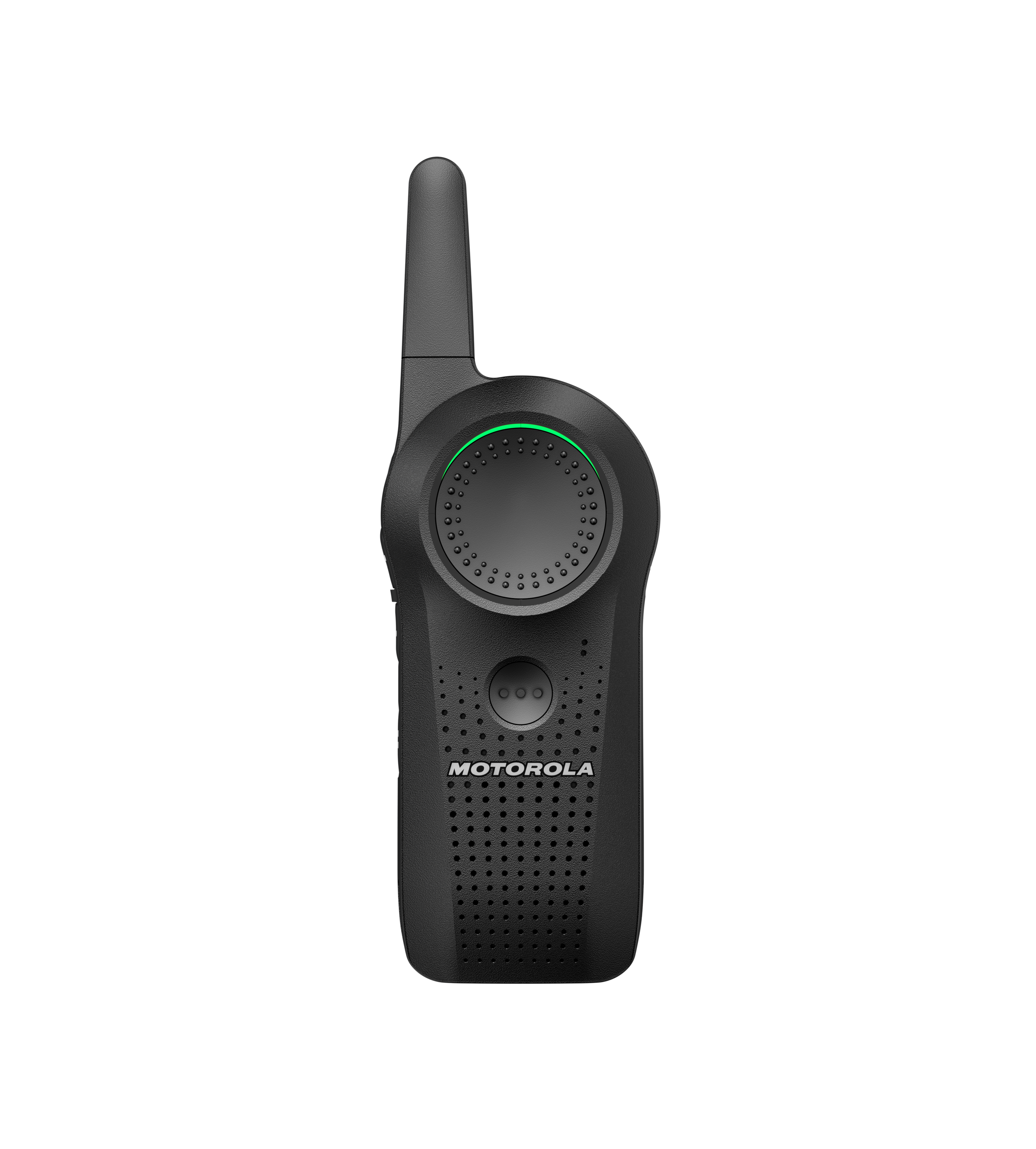
The License-Free Workhorse: Motorola Curve
If your stores prefer a more traditional handheld device but your operations team wants to avoid licensing and programming headaches, the Motorola Curve is a massive step up from your standard walkie-talkie.
License-Free 900 MHz: The Curve operates on a 900 MHz ISM band (using Frequency Hopping Spread Spectrum tech). In plain English? It gives you commercial-grade privacy and clear audio without needing to pay for a frequency license. You just turn it on, and it works.
Interference-Free Audio: Standard UHF CB radios often pick up chatter from nearby construction sites or other stores. The Curve’s digital signal ensures your staff only hear each other, completely eliminating outside interference.
Built for Retail Shifts: It features an incredibly slim, lightweight profile that won't pull down a uniform, a massive 12+ hour battery life to cover a full day of trading, and it's built tough enough to survive the inevitable drops onto polished concrete floors.
Rolling It Out Without the Stress
Upgrading comms for a national retail network doesn't have to mean overhauling your entire IT infrastructure or paying thousands in licensing fees. By leaning into smart devices like the TLK 25 or the Curve, you can give your teams instant, crystal-clear communication that scales naturally with your business.
It just makes for faster customer service, fewer bottlenecks at the registers, and a much smoother shop floor.