The Ultimate Guide to Two-Way Radios for Schools: Which Model Fits Your Campus?
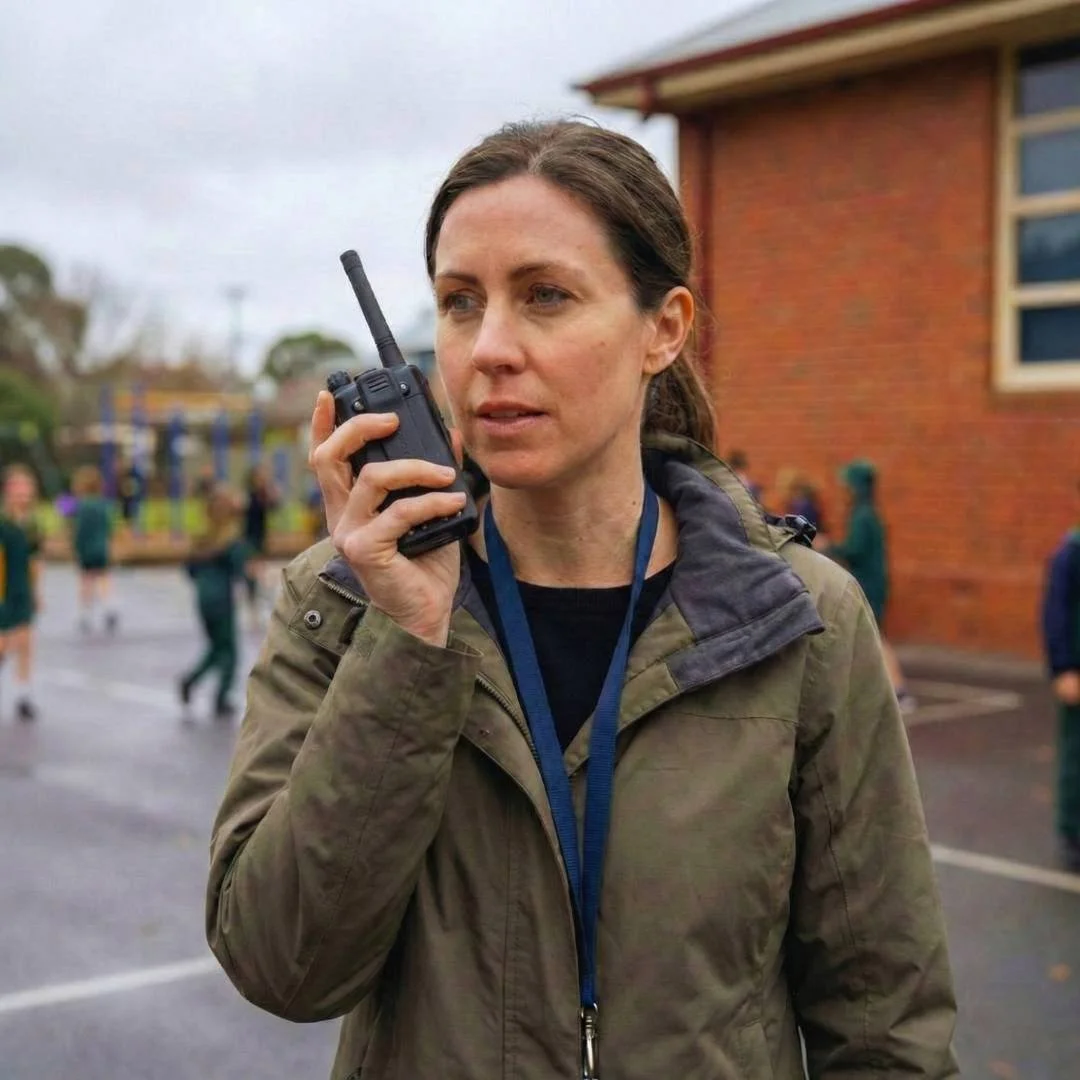
If you walk into the front office of any school in Australia and ask about their radios, you’ll usually hear one of two complaints:
"They are too heavy and bulky, so the teachers leave them in their desks."
"They are too flimsy, and the maintenance team keeps breaking them."
Finding the "Goldilocks" radio—one that is tough enough for the groundskeeper but light enough for a Year 1 teacher—is the biggest challenge for School Business Managers.
At Roar Radios, we know that communication is the backbone of school safety. If your staff aren't carrying their radios because they are annoying to wear, your emergency plan has a gap in it.
To help you navigate the options, we have broken down some of the top contenders currently being used in Australian schools.
The "Smart" Choice: Motorola Curve
Best For: Executive Teams & Admin (Indoor Coverage).
The Motorola Curve represents a shift away from "old school" radio tech. It combines the look of a smartphone with the reliability of a commercial radio.
The Vibe: Sleek and professional. It looks more like a piece of modern tech than a construction tool, which drastically improves adoption among Principals and office staff who dislike wearing bulky hardware.
How it Works: Instead of standard UHF, it operates on the 900MHz frequency band. This digital signal is famous for its ability to "punch" through concrete walls and navigate complex indoor environments, making it ideal for large admin blocks or multi-story buildings.
Key Feature: It offers private, interference-free communication with crystal-clear audio, ensuring sensitive student updates aren't overheard or interrupted by static.
The "Tough as Nails" Workhorse: Motorola R2
Best For: Maintenance, Security, and Large Grounds.
If your school prioritizes durability and raw range above all else, the Motorola R2 is the undisputed king. It is the spiritual successor to the legendary CP200d.
The Vibe: Industrial and rugged.
Why Schools Choose It: It is virtually indestructible. You can drop it on concrete, use it in the rain (IP55 rated), and toss it in a ute without worry.
Audio Power: It features SINC+ noise cancellation, meaning a groundskeeper can hear a call clearly even while operating a ride-on mower or leaf blower.
The "Teacher’s Favourite": EVX-S24
Best For: Teachers and Yard Duty.
This is often the game-changer for schools struggling with staff compliance. The EVX-S24 was designed specifically to solve the "it's too heavy" complaint.
The Vibe: Compact and unobtrusive. It’s roughly the size of a deck of cards.
Why Schools Choose It: It fits easily into a shirt pocket or hangs lightly on a lanyard. It is also available in bright yellow, making it highly visible in a bag or on a desk.
Waterproof: Rated IP67 (submersible), so if a teacher gets caught in a downpour or drops it in a puddle, it keeps working.
The "Long Distance" Runner: Motorola TLK 110
Best For: School Buses & Excursions.
Traditional radios stop working once the bus leaves the school gate. The TLK 110 solves this by using the 4G/LTE mobile network.
The Vibe: Nationwide connection.
How it Works: It functions like a radio but connects via cellular towers. This means a bus driver can be 50km away on a camp excursion and still communicate instantly with the school.
Safety Features: Includes GPS tracking and an emergency button, so the school always knows where the bus is.
The Roar Radios Recommendation
Don't buy a box of 50 radios and hope for the best.
The difference between a radio that improves safety and one that sits in a drawer is usability. If you buy a model that is too heavy, your teachers won't wear it. If you buy one that is too fragile, your maintenance team will break it within a month.
Instead of guessing based on a picture, we recommend testing the hardware on your campus first.
Ready to find the perfect fit for your school?